Strays of the Silver Screen: A Watchlist of Cinema's Greatest Street Cats
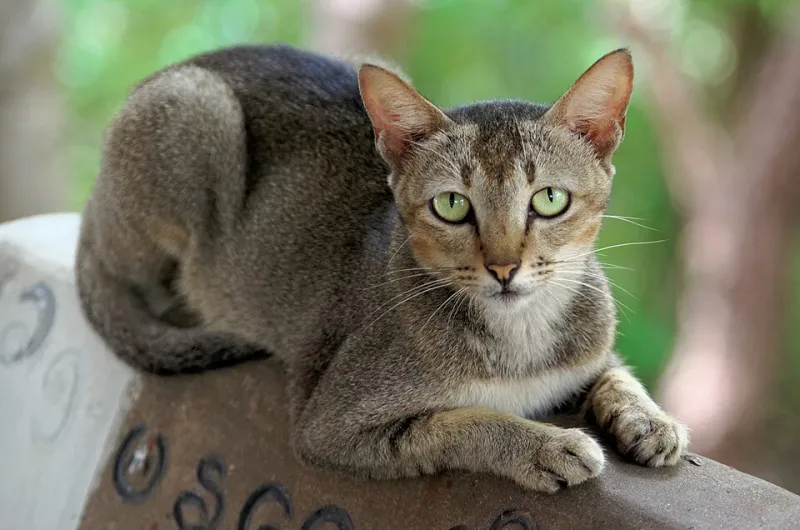
Photo: Jakub Hałun, CC BY-SA 4.0, via Wikimedia Commons
Every indie film owes a debt to the ones that came before it, and Alleycat is no exception. Our title character — a scarred, sharp-eyed stray navigating nine hours of New York nightlife — didn't emerge from a vacuum. She's the latest entry in a cinematic lineage that stretches back more than a century, to a time when a cat wandering through a film frame could stop audiences cold.
So before the premiere, consider this your homework. Twelve films, twelve feral felines, one long tradition of cinema falling for the cats nobody wanted.
The Silent Era: When a Cat Was a Punchline (and Then Some)
1. The Scapegoat (1917) — Charlie Chaplin's short features a scrappy tabby who earns her screen time the hard way, getting booted across the frame in a gag that would make modern viewers wince. Crude? Absolutely. But it's one of the earliest recorded instances of a real street cat doing real street-cat things on camera, unscripted and unimpressed.
2. Kid Auto Races at Venice era shorts (1914–1920s) — Okay, this is a cheat: cats kept wandering into Keystone and Mack Sennett productions simply because Los Angeles lots were crawling with strays. Directors learned quickly that a cat crossing the frame stole the scene no matter what the stars were doing. That lesson — the cat is always the scene-stealer — is practically a law of physics now.
Noir and the '40s: The Cat as Witness
3. The Third Man (1949) — Not a cat movie, but Harry Lime's cat may be the most narratively important feline in film history. The stray that licks Harry's shoes is the one that betrays his hiding spot. A cat, in other words, who knows everyone's secrets. Sound familiar?
4. Born to Kill (1947) — RKO noir at its nastiest, featuring a cold-blooded opening scene involving a cat and a pair of heels that tells you everything you need to know about the villain in under a minute. It's a masterclass in using an animal to establish character — a trick Alleycat borrows shamelessly.
The '60s and '70s: Strays Get Serious
5. Breakfast at Tiffany's (1961) — Yes, the cat has a name: Cat. An orange tabby played mostly by the trained cat Orangy, he's the only creature in Holly Golightly's life that asks nothing of her. The rain-soaked final scene remains one of the great emotional payoffs in American film, cat included.
6. The Long Goodbye (1973) — Robert Altman opens his LA noir with Elliott Gould cooking gourmet cat food for a finicky feline, a scene of such specific, absurd tenderness that it reorients the entire film. The cat vanishes, and the plot begins. Sometimes the cat is the inciting incident.
7. The Black Cat (1934, but the Poe legacy lives on) — Bela Lugosi and Boris Karloff turned Edgar Allan Poe's feline fixation into Universal horror gold. Poe's original story understood something cinema would spend a century rediscovering: cats see what humans hide.
The Indie Era: Cats With Credit
8. Shrek (2001) and beyond — Puss in Boots, technically. Not feral, but the swashbuckling hairball proved a cat could carry a franchise, and studios noticed. The animated boom of the 2000s owes a lot to a cat with big eyes and a bigger ego.
9. The Cat from Hell segments and Tales from the Darkside (1980s) — Anthology horror kept the feral-cat-as-omen alive through the VHS era, usually on shoestring budgets. Grainy, mean, and weirdly influential on the scrappy indie aesthetic Alleycat wears proudly.
10. Kedi (2016) — The Turkish documentary that follows seven street cats through Istanbul is the gold standard for taking strays seriously as subjects, not props. If you've ever wanted to understand why city cats command such devotion, start here. It's streaming, it's gorgeous, and it will wreck you in the best way.
11. Inside Llewyn Davis (2013) — The Coen brothers build an entire running gag — and a metaphor — around Ulysses, an orange tabby Llewyn keeps accidentally losing in Greenwich Village. A folk singer, a lost cat, a night that keeps going wrong: the DNA overlap with our movie is not subtle, and we're fine with that.
12. Stray (2020) — Elizabeth Lo's documentary shadows a street dog in Istanbul, but its real subject is the porous line between stray life and city life — who belongs, who's tolerated, who survives. That question is the engine of Alleycat too. We just swapped in whiskers and a darker night.
Where Alleycat Slots In
Look at that list and a pattern emerges. The cats that endure on screen aren't cute. They're witnesses. They're survivors. They move through the city on their own terms, seeing everything, belonging to no one, and occasionally — when the script needs it most — telling the truth.
That's the tradition our stray walks in. She doesn't talk. She doesn't do tricks. She's just there, all night long, at the edges of every conversation that goes quiet when she shows up. The dive bar regulars feed her. The sax player nods at her. And by the time the sun comes up, she's seen more secrets than any of the humans she shares the screen with.
Cinema has always known what cat people already do: the stray in the alley isn't a background detail. She's the main character. She always was.
Queue up the list, watch the lineage unfold, then come see the newest chapter. Nine lives, one night. The cat's been waiting.