Real Faces, First Takes: The Casting Gamble That Filled Alleycat With Strangers You'll Never Forget
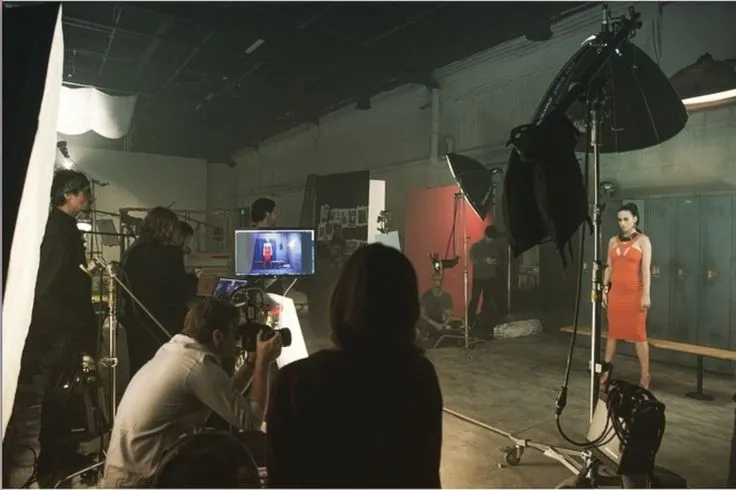
Photo: casting audition behind the scenes indie film dive bar, via i.pinimg.com
Most indie films open with a casting call. Alleycat opened with a bar tab.
Casting director Denise Okafor spent six weeks doing something she calls "reverse scouting" — instead of hunting for actors to play the regulars of a late-night New York, she went out and found the late-night New York itself, then asked those people to play versions of themselves.
"The brief from the director was brutal in its simplicity," Okafor laughs, nursing a coffee at the very diner where the film's third act unfolds. "She said, 'Don't find me actors. Find me the people who were here last night.'"
Auditions in the Back of the Bar
There was no casting office. No waiting room with headshots clipped to a corkboard. The auditions happened where the movie happens — a folding chair in the back of the dive bar, a booth at the diner after the breakfast rush, a stoop outside a rehearsal space in Bushwick.
"It changed everything about how people read," Okafor says. "A nervous actor in a casting office performs nervousness. A nervous waitress reading lines in the diner where she's worked eleven years? That's not nerves. That's texture. You can't direct that kind of truth into somebody."
First-time actor Marisol Vega, who plays the night-shift waitress Rosa, remembers her audition vividly. "I thought it was a joke. This woman asks me to just... wipe down the table and talk about my day. So I did. I complained about the tip situation. Apparently that was the audition."
It was. Vega got the callback the next morning, written on her check.
The Bouncer Who Couldn't Stop Acting
Not every discovery went smoothly. Devon Carter, the real-life bouncer at the bar where the production shot, was cast as — naturally — a bouncer. His problem wasn't delivering lines. It was remembering he had them.
"First week, the director keeps yelling 'Devon, you're performing.' I'm like, isn't that the job?" he recalls. "She says, 'No. You've thrown out a hundred drunks. Throw out this one.' So I stopped acting and just did my actual job with dialogue. That's when it clicked."
Okafor calls it the film's central casting philosophy: subtraction, not addition. "Trained actors build a performance from nothing. Our people had to take themselves apart instead. Peel off the work face. What's underneath is the performance."
The Line Between Real and Reel
The trickiest tightrope, everyone agrees, was authenticity itself. Lean too hard on "just be yourself" and the camera catches self-consciousness. Push too far toward performance and you lose the very thing that made these faces worth filming.
Street musician Theo Brandt — discovered busking on the L platform and cast as the sax player who scores the film's most tender scene — puts it best: "I don't play for cameras. I play for strangers who might throw five bucks in the case. The director just pointed the camera where the strangers usually stand and told me to keep doing my thing."
Okafor admits there were debates. "Some crew members wanted trained actors for coverage scenes. And yes, there were days we burned film — well, burned memory cards — on takes a SAG veteran would've nailed in one. But watch the final cut. Every imperfect take has a pulse. You can't buy that. You can only find it, usually around midnight, usually holding a tray."
Nine Strangers, One Ensemble
By the wrap party, the line between cast and crew had dissolved entirely. Vega taught the gaffer how the diner's espresso machine actually worked. Carter's real coworkers show up as extras. Brandt's actual tip jar made it into the frame — with actual tips in it.
"People ask if we're worried these folks will get famous and disappear," Okafor says. "Honestly? If Hollywood comes knocking on Rosa's diner, good. But I suspect most of them will be back at work Monday morning, slightly more mysterious than before. That's the magic. The movie ends, but the regulars are still there."
For a film about one night where every secret comes out, casting real people was the biggest secret of all — and the one hiding in plain sight, wiping down a table, complaining about the tips.