Reaction Shots Are Confessions: The Cutting Room Logic That Makes Alleycat Feel Like a Whodunit
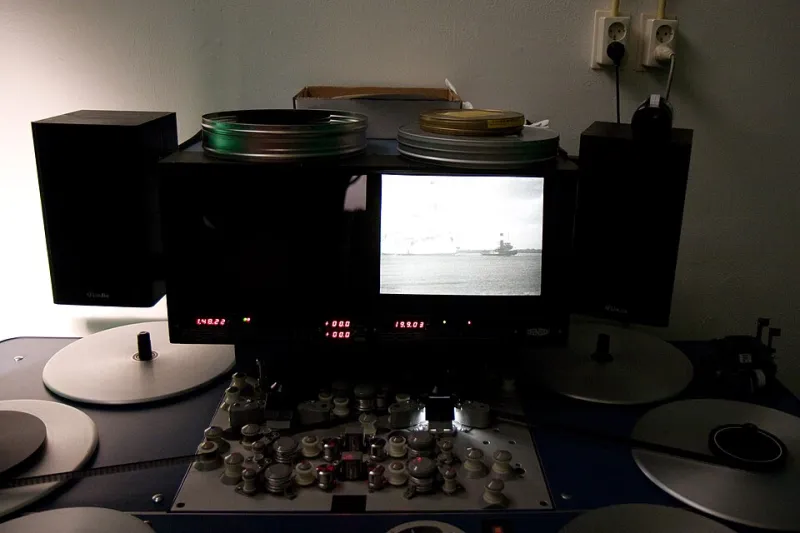
Photo: Marcel Oosterwijk, CC BY-SA 2.0, via Wikimedia Commons
The assembly cut of Alleycat ran two hours and forty minutes. The finished film runs ninety-six. Somewhere in those lost eighty-four minutes is the answer to why the movie feels like a whodunit even though nobody gets murdered and the cat never testifies.
We called editor Priya Raman, who cut the film on a laptop in a spare bedroom in Queens with a second monitor propped on a stack of paperback crime novels. She talked for an hour about rhythm, suspicion, and the ethics of leading an audience by the nose.
The Assembly Cut Was 2 Hours 40 Minutes
“The first version was a hangout movie,” Raman says. “Which I love. But it had no engine. You could leave the room during any scene and come back and nothing had changed emotionally.”
The fix wasn’t a plot device — it was architecture. Raman and director Owen Ruiz rebuilt the timeline so that every thirteen to fifteen minutes, one character’s account of the night gets quietly undermined. Not contradicted. Undermined. A witness says they were at the diner until two. Later, without comment, a clock in the background of another scene shows 1:40 and the same witness is somewhere else.
“We never point at the clock,” Raman says. “If you catch it, you feel smart. If you don’t, you feel uneasy and you don’t know why. Both reactions work.”
Reaction Shots Are Confessions
The film’s most effective tool is also its cheapest: faces listening. Raman estimates that roughly a fifth of the final cut consists of people not talking. When a character explains where they were at 11 p.m., the camera is usually on someone else.
“A line of dialogue can only tell you one thing,” she says. “A face hearing the line can tell you four. We started calling them depositions. Every reaction shot is a testimony the character didn’t agree to give.”
Raman built what she calls a suspicion curve — a literal spreadsheet tracking nine characters’ perceived guilt across the runtime. Every time someone’s number spiked, the next scene had to give them a small reprieve. The rule was simple: no one stays the villain for more than a reel, including the cat.
The Alibi Cut
Nine suspects, one night, one alley. The trick to sustaining that is making every version of the truth feel provisional. Raman did it by trimming entrances and exits rather than scenes. A character who walks into the diner in the wide shot now appears already seated in the next cut, forty seconds earlier than you expected. Nobody mentions it. Your brain files the discrepancy somewhere and keeps it warm.
“Those are the alibi cuts,” she says. “We take away the moment where someone arrives. If you never see them get there, you can’t be sure they came from where they said.”
She used the same technique on sound. A saxophone heard two blocks away in one scene reappears in another with the same phrase, slightly wrong. It was a continuity accident in dailies that became a deliberate motif — evidence that the night is looping, or that memory is unreliable, or both.
Never Cheat the Room
The line Raman refused to cross was inventing evidence. Every misdirect in Alleycat is built from footage that could plausibly mean something else in a different order. That constraint came from a disastrous early test screening where an audience loved the mystery and then felt insulted by the answer.
“Someone wrote on a card, ‘the cat did it,’ which was funny, but their real note was that we’d shown them a shot that only worked as a lie,” she says. “We cut it that week. Misdirection is fine. Manipulation that leaves a mark is not.”
That rule shaped the film’s biggest set piece: a four-minute unbroken take in the alley that originally ran nearly seven. Raman cut it down, then reinstated a single beat where a porch light flicks off in the deep background. It’s never explained. It’s never referred to again. In the suspicion spreadsheet, it moved four characters’ numbers at once.
The Cat as Metronome
Raman also credits the animal performance with the film’s tempo — the cat moves on its own clock, and the cut had to breathe with it rather than around it.
“You can’t rush a cat. So we used the cat to slow us down right before the reveals. Every time the audience starts leaning forward, the cat sits down and licks a paw. It’s a metronome and a warning. Something’s about to change and you’re not allowed to be ready.”
That’s the whole philosophy of the edit, really. Withhold nothing that’s true. Just decide, patiently and a little cruelly, when the room gets to see it.