Listen Closer: How the Quiet of 3 A.M. Became Alleycat's Most Honest Character
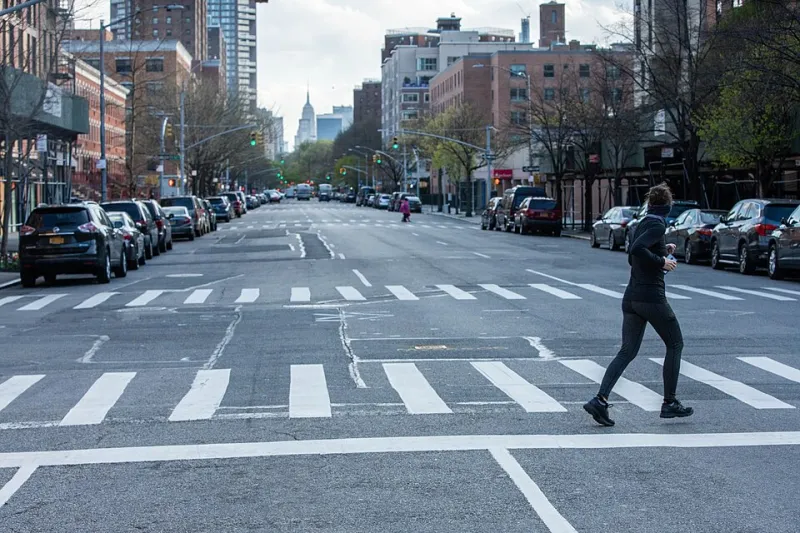
Photo: Anthony Quintano, CC BY 2.0, via Wikimedia Commons
Somewhere in the second act of Alleycat, there's a stretch of nearly forty seconds where almost nothing happens. A character sits on a stoop. The city breathes around her. And if you're watching it the way the sound team hoped you would, you'll notice something strange: the silence isn't silent at all.
There's a refrigerator humming through a propped-open bodega door. A siren that rises and fades without ever arriving. The distant clatter of a garbage truck making its lonely rounds. It's the sonic fingerprint of 3 A.M. in New York, and according to the people who built it, it's the most honest thing in the entire movie.
The Hush Isn't Empty — It's Loaded
"People think night is quiet," says Dana Okafor, a production sound mixer who has worked on a dozen New York indies, though not Alleycat itself. "It's not. It's just different. The daytime noise is competing for your attention. Night noise is all texture. Your brain fills in the rest."
That difference is exactly why one-night movies lean on ambience so heavily. When your entire film takes place between dusk and dawn, you can't hide behind crowd scenes or morning-routine montage. Every footstep lands on concrete that has to sound like concrete at 2 A.M. — a little more echo, a little more loneliness.
Alleycat's sound team reportedly spent three full nights recording on location, not for dialogue, but for what mixers call "night beds": long, continuous captures of a space doing nothing. Empty subway platforms where the ventilation system hums like a held breath. Diner interiors where the coffee machine ticks as it cools. A dive bar's neon sign buzzing at a pitch that, if you listen long enough, starts to feel like a mood.
Distant Sirens, Real Feelings
There's a reason every New Yorker watching Alleycat flinches slightly at the far-off siren woven into the third-act rooftop scene. It's not just recognizable — it's emotionally loaded.
"A distant siren says someone, somewhere, is having the worst night of their life," Okafor explains. "In a one-night movie, that's subtext you get for free. The audience feels the stakes of the city without a single line of dialogue."
The trick, veteran sound designers say, is restraint. Stack too many sirens and the scene becomes a police procedural. The goal is a hint of danger at the edge of the frame — close enough to feel, far enough to ignore, the way you actually do at 3 A.M. when you're too tired and too honest to be afraid.
The Fridge Problem
Ask any indie sound person about night shoots and they'll eventually mention the fridge. Or the HVAC unit. Or the ice machine down the hall. These appliances are the mortal enemies of clean dialogue — but they're also, sometimes, the best actor on set.
Alleycat's diner scenes reportedly kept the actual refrigerator hum in the mix rather than scrubbing it out. It's a choice that would make a studio sound editor wince, and it's exactly the kind of choice that makes the film feel like memory instead of product. Real kitchens hum. Real nights have a floor of noise under them. Removing it would be like airbrushing the grime off the alley — technically cleaner, emotionally emptier.
A Starter Playlist of Night Textures
For aspiring filmmakers (or just film buffs who want to hear their city differently), here's the short list of textures the pros say define the post-midnight American soundscape:
- The empty platform hum — subway ventilation, distant rail screech, the PA system nobody's listening to
- The cooling engine — a car that just parked, ticking as the metal contracts
- The lone truck — garbage, delivery, or produce; the working-class heartbeat of the small hours
- The bodega door chime — the friendliest sound in the urban night
- The far siren — Doppler-shifting, never arriving
- The fridge — the drone that says someone is home, even if it's only you
Record them yourself with a handheld recorder, or just start noticing them. Either way, you'll never watch a night movie the same way again.
Why It Matters
Alleycat is a film about secrets coming out — the things people only say when the day's performance is over. The sound design understands that instinct completely. Night ambience strips away the daytime noise we use to hide from ourselves, and what's left underneath is the truth.
Or, as Okafor puts it: "Daytime sound is what people say. Nighttime sound is what they mean."
The next time you watch Alleycat, close your eyes for one minute. The city will tell you everything.